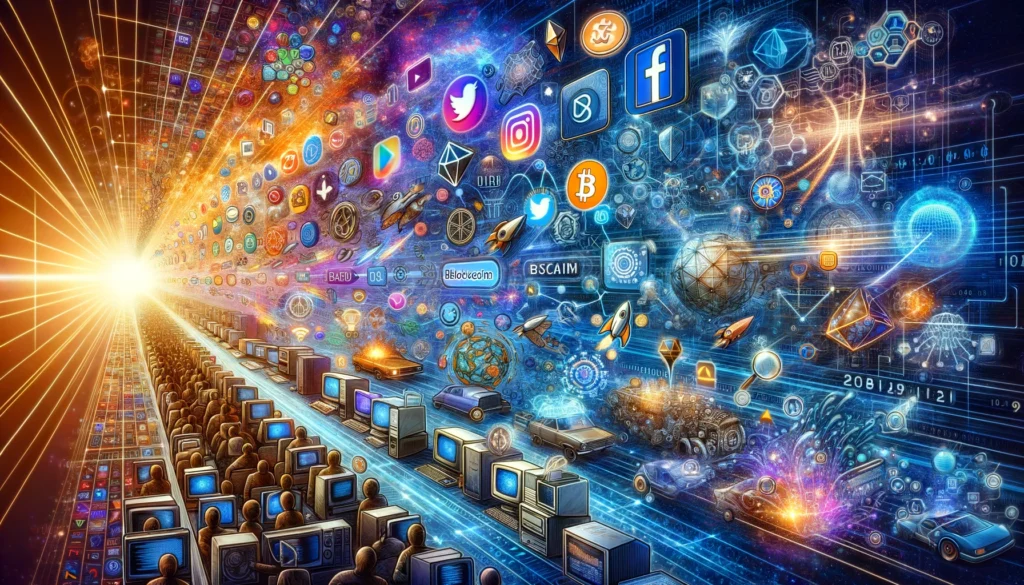
The internet has been a transformative force, continually evolving to reshape our lives and industries. From its rudimentary beginnings as a network of static pages to the dynamic and decentralized platforms of today, each phase of its evolution has been marked by groundbreaking innovations. In my view, the journey began with search engines, progressed through eCommerce, expanded into the realms of social media and apps, and now ventures into the new frontiers of blockchain and artificial intelligence.
The Dawn of Discovery: Search Engines
It all started with search engines. In the early days, the internet was an untamed wilderness of information. Enter search engines—these digital librarians not only indexed web pages but also made them discoverable. Google, perhaps the most iconic of them all, began as a simple idea in a garage but quickly became the gateway through which we access the internet’s vast resources. This era was fundamental because it structured the internet, making information accessible and, more importantly, usable.
The Rise of eCommerce: Buying and Selling Online
As the internet became more navigable thanks to search engines, eCommerce soon took center stage. Platforms like eBay and Amazon transformed how we shop, turning the internet into a global marketplace. Overnight, anyone with an internet connection could buy or sell almost anything from anywhere. This wasn’t just convenient; it was revolutionary, breaking down the geographical barriers of commerce. eBay, for example, empowered individuals to become entrepreneurs, while Amazon reshaped retail with its customer-centric approach.
The Social Connection: Web 2.0 and Social Media
Following the commercialization phase, the internet took on a more personal dimension with the advent of social media and Web 2.0—where static pages gave way to interactivity and user-generated content. Facebook, Twitter, and later Instagram, turned users into content creators, driving engagement and fostering communities. This era democratized content production and turned the internet into a social space where every voice could be heard. Moreover, it shifted the focus from mere consumption to participation, setting the stage for the more interactive web we know today.
The Integration Era: Apps and Mobile Internet
As smartphones became ubiquitous, apps followed, becoming the new face of web interaction. These applications made services like Uber, Spotify, and countless others a part of daily life, seamlessly integrating the internet with our everyday activities. The app revolution not only made the internet mobile but also more personal. Each app, a gateway to a service or a community, tailored the internet experience to individual needs, making it more relevant than ever before.
The New Frontier: Web 3.0 with Blockchain and AI
Now, we stand at the brink of what many call Web 3.0, marked by two transformative technologies: blockchain and artificial intelligence. Blockchain, the technology behind cryptocurrencies like Bitcoin, offers a decentralized and secure way to record transactions and manage data. It represents a shift towards a more secure and transparent internet where trust is built into the system without centralized control.
Artificial intelligence, on the other hand, is redefining the possibilities of the internet. From algorithms that personalize your news feed to chatbots that can mimic human conversation, AI is not just a tool; it is becoming an integral part of the web’s fabric. It is enhancing the user experience by making interactions smarter and more adaptive. AI is not merely a technological evolution—it is a revolution that promises to redefine how we interact with the internet and each other.
Looking Ahead: The Internet’s Continuous Evolution
As we look to the future, the continuous evolution of internet technology promises even more profound changes. Each wave of innovation has built upon the last, creating a richer, more interactive, and more integrated web experience. In my opinion, the next phase of the internet will be about further blurring the lines between digital and physical realities, perhaps through the rise of augmented reality or further advancements in AI and machine learning.
The internet began as a tool to find information, but it has grown into a space that shapes how we live, work, and connect. The journey from search engines to AI has been nothing short of remarkable. As we stand on the cusp of the next technological leap, one thing remains clear: the internet will continue to evolve, and with it, so will we.